
スクワラン
Squalane — The shark that isn’t in it
An ingredient named after a shark, which mostly no longer comes from one. A hundred and twenty years of refining the same molecule without ever renaming it.
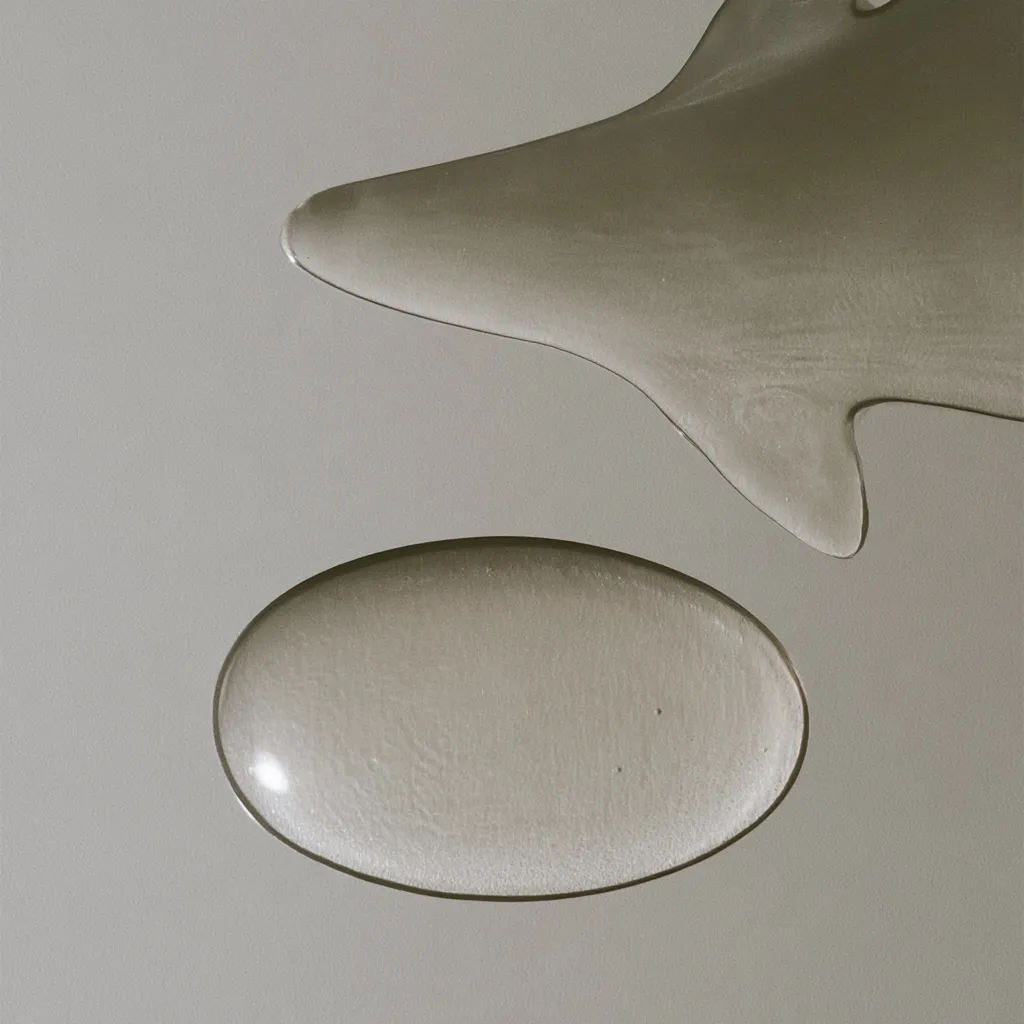
In 1906 a Japanese chemist named Mitsumaru Tsujimoto, working on oils and fats, isolated an unusual compound from deep-sea shark liver. He called it squalene, after Squalus, the shark genus it came out of. The name has held for a hundred and twenty years, which is awkward, because very little of what goes into skincare now comes from sharks at all.
Raw squalene had a problem. It oxidised — left in contact with air it turned, and quickly, which made it close to useless in anything expected to sit on a shelf. The fix was hydrogenation: saturating the molecule so there was nothing left for oxygen to attack. That produced squalane, with an a, and it is the only reason the ingredient exists commercially.
A stabilised version reached the market in the 1950s through the French chemist Sébastien Sabetay, sold under the name Cosbiol; the firm he formed with René Laserson in 1951 distributed it for decades.
What changed was the source, not the substance
原料について
For most of the century that followed, the source was still the shark. Deep-sea species carry it in volume in their livers, and the industry took a great deal of it.
Squalane occurs in olives, in rice bran, and in sugarcane fermented by engineered yeast. The plant and fermentation versions are chemically identical to the original — same molecule, no shark — and they are what any serious formulator now buys.
So: one compound, still named after an animal it no longer needs. Isolated in 1906. Stabilised in the 1950s. Re-sourced entirely within the last twenty years. Never relaunched, never given a better name, never presented as new.
It sits in the Overnight Recovery Cream, doing the job it has always done — putting back what the day took, without weight — and it comes from plants.
改善 — kaizen. The molecule was already right. What changed was how it gets made.
In 1906 a Japanese chemist, Mitsumaru Tsujimoto, isolated an unusual compound from deep-sea shark liver. He called it squalene, after Squalus, the shark genus. The name has held for a hundred and twenty years — which is awkward, because very little of it now comes from sharks.
Raw squalene oxidised too fast to sit on a shelf. Hydrogenating it — saturating the molecule so oxygen has nothing to attack — produced squalane, with an a. That is the only reason the ingredient exists commercially. A stabilised version reached the market in the 1950s, through the French chemist Sébastien Sabetay.
What changed was the source, not the substance
原料について
For most of the century that followed, the source was still the shark. Now squalane comes from olives, rice bran, and sugarcane fermented by engineered yeast — chemically identical, same molecule, no shark.
One compound, still named after an animal it no longer needs. Isolated in 1906. Stabilised in the 1950s. Re-sourced within the last twenty years. Never relaunched, never renamed, never presented as new.
It sits in the Overnight Recovery Cream, doing the job it has always done — putting back what the day took, without weight — and it comes from plants.
改善 — kaizen. The molecule was already right. What changed was how it gets made.
Referenced in this note
More notes
覚書

白きくらげ
Why tremella holds 500× its weight in water
The science behind the mushroom we keep coming back to.
椿
Three camellias
One genus, three ingredients, three of four formulas. Not a coincidence.

米ぬか
Rice, long before it was a skincare ingredient
Sake brewers noticed something about their hands. What survives scrutiny.