米ぬか
Rice, long before it was a skincare ingredient
Sake brewers noticed something about their hands. A short history of rice water, and what survives scrutiny.

The story every rice-ferment product tells goes like this: a researcher visits a sake brewery, notices that the elderly tōji working the mash have unusually smooth hands, and an ingredient category is born. It is a good story. It is also roughly true, which is rarer than you would hope in this industry.
What it is not is evidence. An observation about brewers’ hands is a hypothesis, not a result, and the distance between the two is where most skincare marketing lives.
What is actually in the liquid
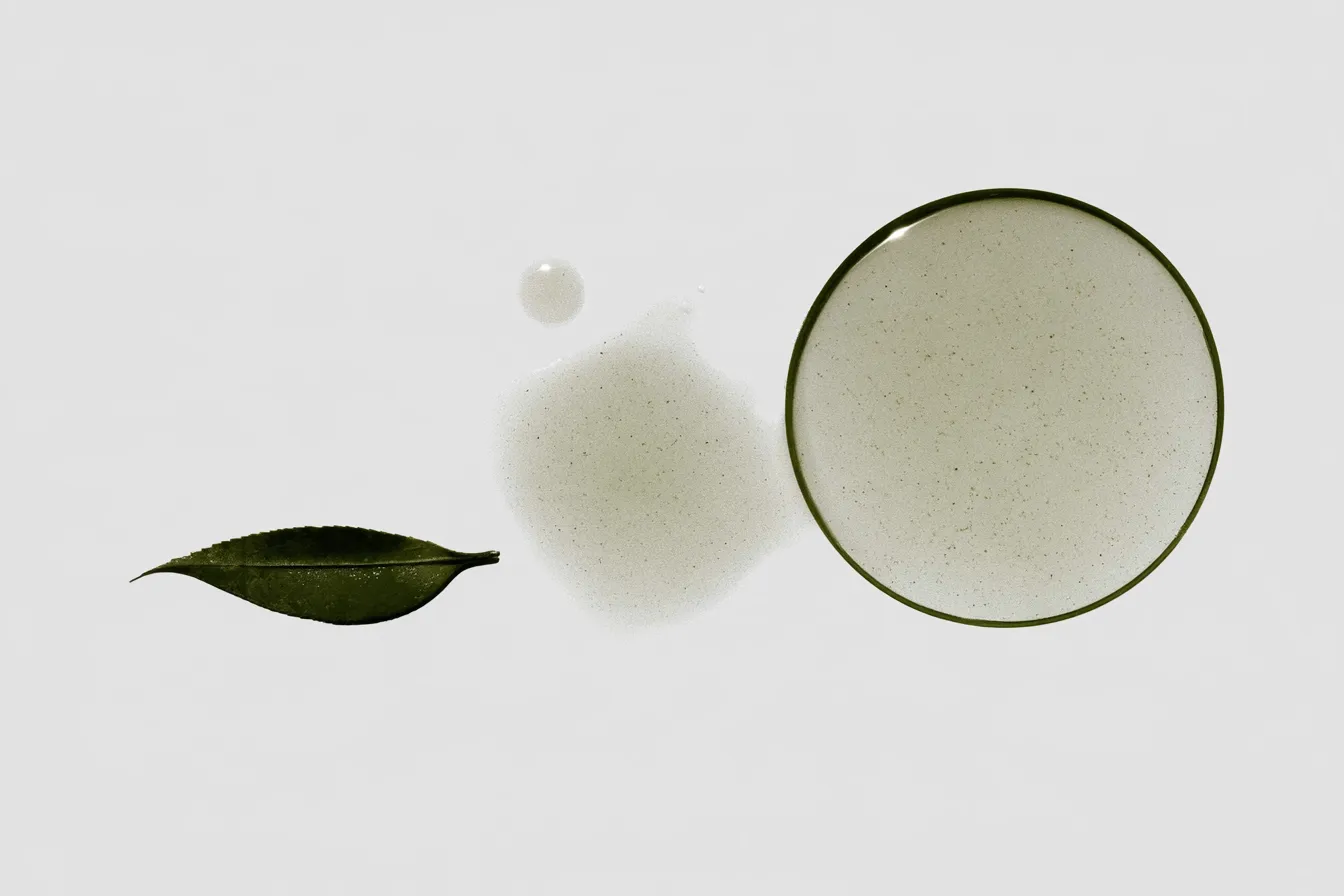
Rice ferment filtrate is what remains after rice is fermented — typically with Aspergillus or a yeast — and the solids are filtered out. The liquid carries amino acids, sugars, small peptides, organic acids and B vitamins produced during fermentation. Plain rice water, the kind produced by rinsing rice at home, is a much simpler thing: mostly starch and a little of the surface nutrition, with none of the fermentation products.
The two get used interchangeably in marketing copy and they are not the same material. If a label just says rice water, it is the simpler one.
What survives scrutiny
- Hydration and feel — well supported. Amino acids and sugars are effective humectants and rice ferment is a genuinely pleasant one to formulate with. Skin looks smoother and less dull. This part is real and it is not remarkable; plenty of ingredients do it.
- Barrier support — plausible. There is reasonable work on ferment filtrates supporting the skin’s own barrier lipids, though study sizes are small and often industry-funded.
- Brightening — overstated. The claim usually rests on kojic acid, which is produced by the same Aspergillus species. Kojic acid as an isolated, dosed active has evidence behind it. Whatever trace ends up in a general ferment filtrate is not the same thing and should not be sold as if it were.
- Anti-ageing — unsupported at this level. Nothing in the literature justifies it for a ferment filtrate at cosmetic use levels.
The honest summary: an excellent humectant with a very long use history and a marketing department that got ahead of it.
The variability problem nobody mentions
Ferment filtrate is not a defined molecule. It is the output of a biological process, and its composition depends on the strain, the substrate, the temperature, and how long it ran. Two suppliers’ filtrates can differ substantially while carrying the identical INCI name on the box.
This is why we buy from one supplier, on a fixed strain and a fixed protocol, and why the ferment fraction is one of the things checked batch to batch. It is also why we are cautious about how much weight we let it carry in a formula — an ingredient you cannot fully specify should not be the ingredient a product depends on.
More notes
覚書