
椿
Three camellias
Tsubaki oil, green tea and camellia leaf are the same plant family, spread across three of four formulas. Why that isn’t a coincidence.
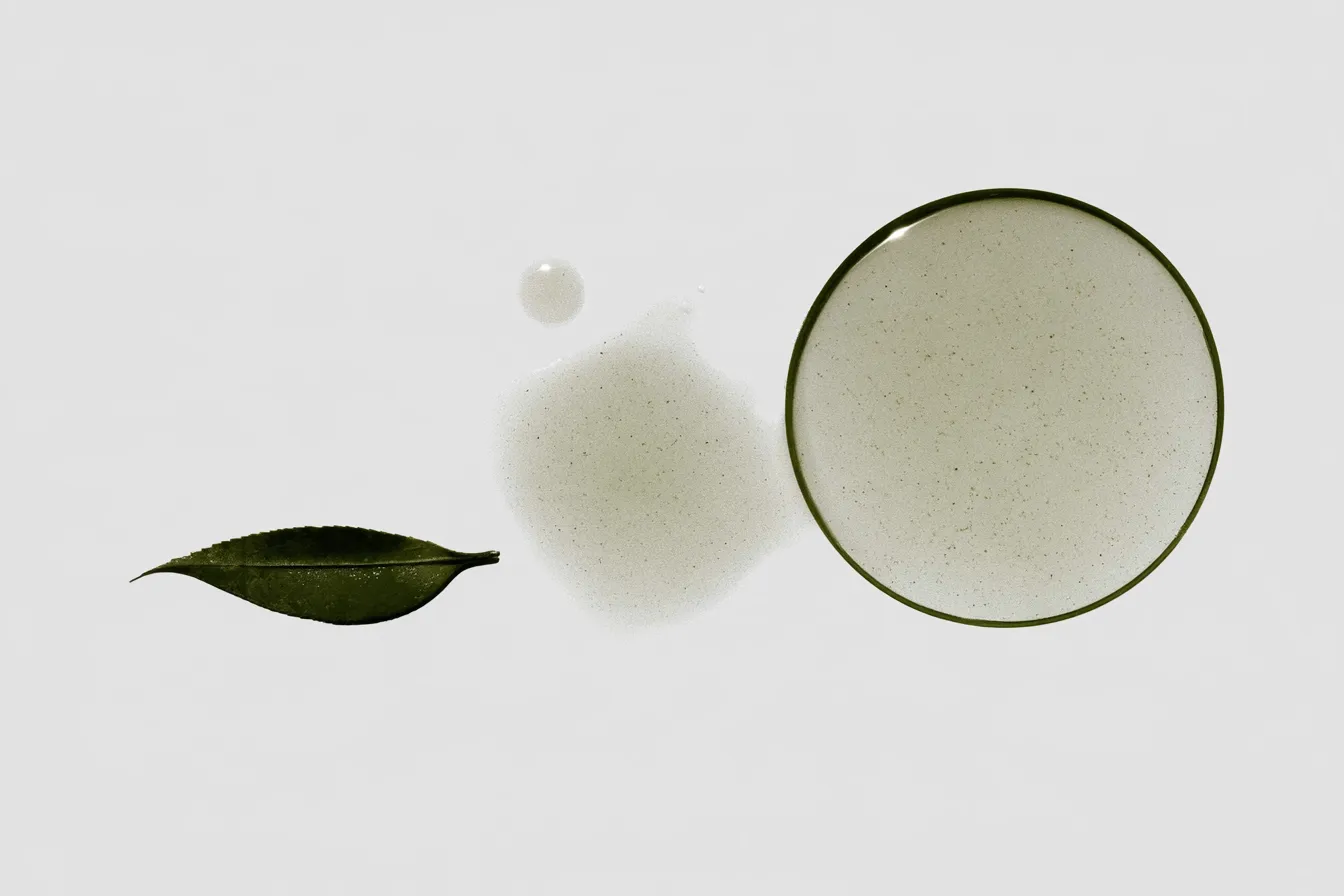
Read our ingredient lists closely and the same genus keeps appearing under three different names. Camellia japonica seed oil — tsubaki. Camellia sinensis leaf extract — green tea. Camellia oleifera, the tea-seed camellia. Three species, one genus, three quite different jobs.
Camellia japonica — the oil
Tsubaki oil has been pressed in Japan for centuries, most famously on Izu Ōshima, and used on hair and skin for about as long. It is heavy in oleic acid, which makes it a slow-spreading, cushioning oil that sinks rather than sits. It is closer in feel to something the skin already produces than most plant oils are, which is why it disappears instead of leaving a slick.
That oleic-rich profile has a trade-off worth stating: very oleic oils suit dry and normal skin best. If you are oily and congested, a lighter, more linoleic oil is usually the better choice, and we would rather you knew that than bought the wrong jar.
Camellia sinensis — the leaf
The tea plant. The extract brings polyphenols, chiefly EGCG, which behave as antioxidants in the formula and have a reasonable body of literature behind them for calming the look of reddened skin. Their other job is quieter and entirely practical: antioxidants help protect the oils in the jar from going off, which is part of how a low-preservative formula stays stable.
The same plant family gives us the lipid, the antioxidant and the astringent. Three problems, one genus — that is efficiency, not theming.
Camellia oleifera — the third one
Tea-seed camellia sits between the other two. The leaf extract is mildly astringent and tightens the look of the surface for a short time; the seed oil is lighter than tsubaki and useful where a formula needs slip without weight, which is why it appears in the cleanser rather than the cream.
Why we did not spread it around
A wider ingredient list is easier to market. Every additional botanical is another line on the box, another story, another reason for someone to pick it up. It is also another sensitiser, another supply chain, another variable when something goes wrong.
Working within one genus we already understand — sourcing, seasonality, how it behaves at 4°C and at 30°C, how it smells at month eighteen — is less impressive on paper and considerably more reliable in a jar. When something in a batch is off, there are fewer places to look.
More notes
覚書

白きくらげ
Why tremella holds 500× its weight in water
The science behind the mushroom we keep coming back to.

米ぬか
Rice, long before it was a skincare ingredient
Sake brewers noticed something about their hands. What survives scrutiny.

納豆
Natto, and the ingredient that came out of it
How a breakfast dish ended up holding water in a night cream.